17/02/2015

CLASSIC COMEDY - Count Arthur Strong


The only time I have mentioned in the CLASSIC COMEDY section a sitcom that is not strictly aged or classic and indeed quite modern, was back in May of last year with Ricky Gervais' Derek. Whilst I did and still do love the character and the show I conceded that, whilst the potential was certainly there, the status of Derek as a definitively classic piece of TV comedy could still be doubtful.
Now after two series, I have no doubt in my mind at all when it comes to the genius of Count Arthur Strong. To me, this is a man, a character and a show that is sheer laugh out loud wonder when it comes to comedy, and should be hailed as such.

On paper, the core of this show and of this remarkable character (created, written and brought to life by the brilliant Steve Delaney) should not work. A deluded and arrogant washed-up variety act who has developed a neurotic penchant for wildly over exaggerated situations and great tendency to mix his words up. Yes you can see how bits and pieces might be funny, but you would be forgiven for thinking that it could amount to nothing more than a few titters and a lot of awkward tragic silence.
And yet the conception and execution of Count Arthur Strong is such that one always feels safe in the hands of the Count, and once he has you sat comfortably he makes you ache with laughter.

To me, Steve Delaney's hard work, attention to detail and vision when it comes to Arthur is sublimely perfect. Without such he would not be able to throw this great character into such an array of situations week-by-week, some far-fetched and some not so, and still come out with awe-inspiring and often side-splitting hilarity. Yes for maybe the first episode you see Arthur Strong can be a bit off putting as a central character, but once you know his form and what to expect, you can just sit back and enjoy what he has to throw at you - which is almost always the work of comedic genius.

If I had one criticism of the show, it would be that the supporting cast are ever so slightly over-shadowed by this comedic tour de force. When the central character is so good, this is no real shame, but it would be nice to see a bit more of the supporting cast fleshed out, as opposed to their bare essentials being played off Count Arthur Strong.
As we have progressed into the second series (which ended brilliantly tonight, though my favourite episode has got to be the penultimate one of the series) this has got better certainly. Rory Kinnear's character of the quiet, shy and now long-suffering Michael has been done very well; often becoming a great counter part to Arthur. The characters of John and Eggy, whilst constant, haven't really been given that much to play with (though again more has been done with them as opposed to the first series) and the Bulent and Sinem characters have progressed too (even if it is just in a slightly two-dimensional fashion).

Yet with a supporting cast that is positively moving to back him up, brilliantly timed and written scripts, and sheer endless amounts of comic character, Steve Delaney's Arthur Strong is a joy to watch. In many ways this story reminds me of Brendan O'Carroll and Mrs. Brown's Boys; a man works tirelessly and with a lot of creative flair to make a success of a great character for years, and finally begins to enjoy prime time success. I am as happy for Delaney and Arthur as I am for O'Carroll and Agnes Brown. 
I adore the entire feel of Count Arthur Strong. Utterly hilarious in its genius, and genius in its levels of hilarity. I have loved the first two series, and I certainly hope we get to see more. Regardless, I have no compunction in saying that for me, Count Arthur Strong is truly and definitely a modern comedy classic.



13/02/2015

Maleficent


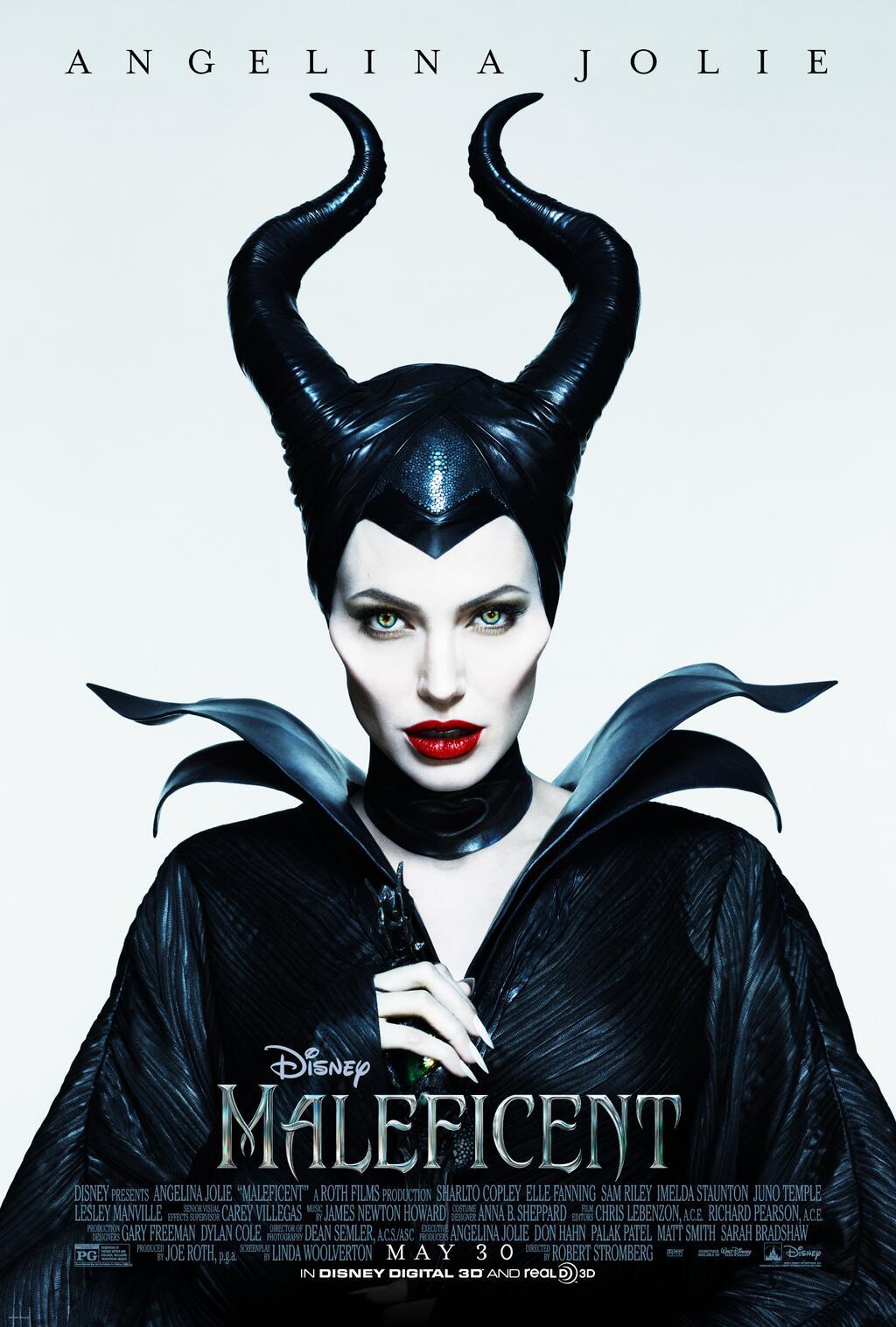
I freely confess that as a child, Maleficent was the one Disney villain I was afraid of. I was greatly intrigued when I heard that her story was going to be the latest in a long line of classic Disney "reboots". Yet, I worried whether or not this truly iconic and demonic 1950s cartoon villain could be given her due in a twenty first century retelling.
Well, although the film itself was good, there were flaws. Yet thankfully, any flaws were magnificently dwarfed by Angelina Jolie as the titular character Maleficent.

Initially I assumed that this would be just a live-action re-hash of Sleeping Beauty, where we originally saw Maleficent. But no. This truly is a revamp if ever there was one - keeping the core characters of Sleeping Beauty but giving the tale from beginning to end a whole new direction. We focus on Maleficent, and her astonishing and quite intricate character development and evolution from idyllic fairy to villain of nightmare to unlikely hero.
OK, I will admit the overall feel of the film was a good one. Stunning effects, interesting character dynamic, and a bit of airy (if  a little cheesey and convoluted) humour. However distinctly lacking was the  depth and the flow to the story that a revamp like this needs in my opinion. In terms of the actual plot, it all felt a bit rushed and cobbled together. Attempts at drama, action and power were made surely but it just did not come off most of the time. It was not a new Sleeping Beauty, nor  was it a thoroughly thought out new Maleficent tale; not really. And as a consequence, one could not really believe in the plot and most of the characters were badly presented; bitty and unfinished often - as if they were trying to subtly hint at characters from the original cartoon and then leave it at that.

The performances had the potential to be good, and the cast list was impressive. British staunch talents like Imelda Staunton featured, and whilst Sharlto Copley, Sam Riley and Elle Fanning were solid enough and had a couple of good moments, they were nowhere near enough.
No, when it all boils down to it, the power and in my view the success of this film comes from the conception and execution of the titular character and the stunning performance behind her.

Not only does Angelina Jolie's Maleficent equal the original in terms of iconic status, complexity, story and power...I'd say she surpasses the original. The original cartoon Maleficent was portrayed simply as the "mistress of all evil". And oh boy she was. Jolie's Maleficent is so much more. In a performance that almost hinges on reluctance, second choices and changes of mind, Angelina Jolie is simply stunning from the first moment to the last.
Not only does she excel in portraying the insanity and the evil of Maleficent, but so too does she effortlessly capture the new back story and driving force of her character (which is the whole point of the movie). Thus we also get to see the conflict, sincerity, beauty, goodness and the love of Maleficent. 
From being terrified as a child, I have gone on to smile at this version of Maleficent - all because of the perfect performance of Angelina Jolie.

To my mind Angelina Jolie carries this film, but she carries it superbly. Not merely a cheap trick or imitation, this version of Maleficent truly belongs in the Disney canon, and can go on to provide a massive portion of the story of the character we thought we knew. I was terrified of Maleficent, but now thanks to Angelina Jolie, I completely admire and even adore the character. Who would have thought it?


01/02/2015

Last Tango in Halifax - The Third Time Around


From the off I was a firm fan of Last Tango in Halifax, and I was thrilled to see it return. What started as an opening concept of two aged people who, after living whole lifetimes separately from each other (with their own very different families) are finally reunited in their twilight years, has become a show that has gone on quite the journey. Of course at its heart,  Last Tango is still at its core about the lives of Alan and Celia (embodied wonderfully by Sir Derek Jacobi and Anne Reid). Yet evolution and development is necessary in any successful series, and so to is the case with Last Tango in Halifax.
When the first series hit our screens in 2012, one of the many great things I was struck by was the fact that, although a staunch romantic drama, Last Tango also had a distinct tinge of the highly comedic and ludicrously laughable. This came and still went on to come from brilliant observation, writing and acting but the blend of drama with a distinct hint of the comedic did not escape me. Fast forward a few years, and this dynamic has changed. We have got more dramatic, and he have got a bit more of the full on. Last Tango's creator and writer Sally Wainwright was quoted as saying that there's not much compelling drama to be found in everyone having a good time. This is true, and it definitely shows in the latest series. I did have solid faith in Last Tango to deliver again, but I did in the end detect a hint of the difficult third album, although not nearly enough to detract from what is purely and simply great television.


They say if you have a good formula don't change it and, bar a bit of fettling, they haven't. We may not have as much comedically, but the wit and the joy is still there. As I said, the core elements of Last Tango are still strongly in place - Alan and Celia and their daughters Caroline and Gillian. Yet it was now a case of what happens to them that moves the plot on. We had the reunion driving series one, the slight progression of settling in (in essence) in series two, now that progression needed to be kicked into overdrive in series three. How that progression would alter (or not as the case may be) these characters we have come to know and love would prove to drive Last Tango a series further into our hearts and minds.

The one character that I felt wasn't given much newness to tackle was Anne Reid as Celia. A lot of her elements remained the same - loving Alan one minute, then when affronted turned against him on a sixpence, still staunchly against her daughter's lesbian relationship and eventual marriage, and essentially all other times being a kind of background busybody. The lack of direction for Celia did surprise me somewhat, but that is not to say Anne Reid failed to deliver; quite the contrary. Series three may show Celia as we are used to seeing her, but that is not a bad thing necessarily. Anne Reid still gives a resoundingly warm and well-crafted performance, even if plot-wise it is mostly things we have seen before.
Her daughter Caroline, played beautifully by Sarah Lancashire, for me had the most powerful, the least subtle and often the rawest story arc this time around. I don't want to spoil too much, but Caroline's ride is quite a bumpy one in this series, and we see Sarah Lancashire handle this, again as well as familiar nuances of her character, with superb ease, fluidity and believability.
Gillian again seems to be a bit stagnant in terms of character development oddly enough. On the face of things, Nicola Walker's character could be seen to come a long way in this series, and in some ways she does. Yet in terms of what drives her, her psychology and her internal struggles, to me again not much has changed (despite the fact that there is still a lot going on there!). Again however it is a case of "don't knock a good thing". Nicola Walker is sublime as Gillian. Always brilliantly timed, oozing just the right amounts of charisma and vulnerability combined and all her ups and downs as Gillian are always deliciously watchable.
The character that has the most interesting, the most subtle and the most well executed character shift is oddly Alan I feel. I have been a long time massive fan of the legendary Sir Derek Jacobi, and I adore what he does as Alan. What's more I feel that altering Alan's character make up as they did in series three was a bold move, but one that did pay off. In essence, and rightly so, Alan is still as we know him; charming, lovely, lovable, witty and joyous to watch. But watch what happens to him when we see a skeleton in his cupboard come home to roost. It is not a total character shift, but it adds a powerful tinged streak to his character that is both interesting plot-wise and one that is also delivered perfectly by Sir Derek Jacobi.

So those are the main character shifts, and other tidbits of plot and series progression seem to be instigated by either lack of or the addition of supporting cast. Ronni Ancona's Judith was culled straight from the off, which I disliked at first because I liked the character and the performance, but I can see that they perhaps thought it could not go much further, at least short term. Dean Andrews and Tony Gardner stay as Robbie and John respectively but they don't really add much novelty to the party (once again probably sticking with what they know and adding it to the pot). Rupert Graves is the major new casting addition as Gary, who is linked strongly with the above change in Jacobi's Alan. Graves' performance, like his character, often came across as sporadic and confused but all in all I do like his approach and I feel he is a refreshing boost to the already impressive cast. Finally, there is a big and lasting moment drama wise involving Kate, Caroline's love interest, played by Nina Sosanya.

So yes, an interesting mix for Last Tango this time of old and new, stability and novelty, and risk and reassurance. On balance, I feel they got it pretty much right. As I said, a good way of doing things should not be tampered with too much and in this instance I feel the Last Tango team have done just enough to keep things interesting, but have kept enough old elements to keep us invested and enamored with a series I have no doubt we will see again (huzzah!) and also a series that I am sure will go on to become a TV classic.